
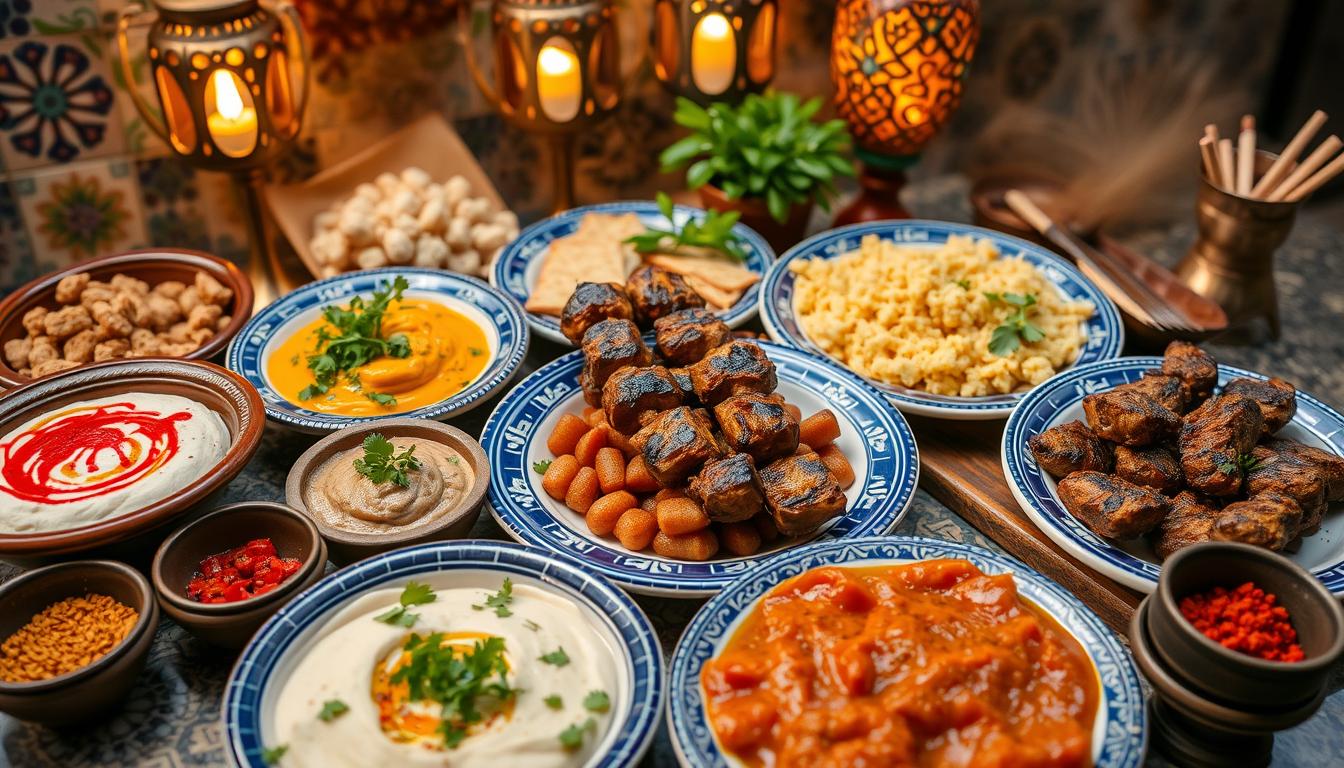
Middle Eastern cuisine is a journey through ancient aromas and flavors. It offers a wide range of dishes for every taste. This cuisine is a feast for the senses, with popular recipes and a variety of foods.
From spicy Persian stews to refreshing Turkish salads, middle eastern food is exciting to explore. It uses spices, herbs, and ingredients like olives and olive oil. The cuisine spans many countries, including Lebanon, Iran, Turkey, and Egypt, making it a rich world to discover.
In this article, we’ll dive into the world of middle eastern food. We’ll explore its popular dishes, cooking techniques, and the cultural importance of food. We’ll highlight the diversity and richness of middle eastern cuisine, including its dishes and recipes.
An Introduction to Middle Eastern Cuisine
Middle Eastern cuisine is rich and diverse, shaped by history, culture, and geography. It combines arabic cuisine, persian cuisine, and turkish cuisine. Each country brings its own flavors, ingredients, and cooking methods. It’s not just about food; it’s about hospitality, community, and identity.
In the Middle East, meals are for bonding with family and friends. They’re also a chance to welcome guests. The cuisine uses fragrant spices, herbs, and ingredients like cumin and coriander. These add depth to dishes. From Ottoman Empire dishes to desert nomads’ meals, Middle Eastern food shows the region’s complex history and cultural exchange.

Food’s cultural importance in the Middle East is seen in how meals are shared. In many places, meals are a time to strengthen social bonds. The cuisine reflects the region’s trade routes, with ingredients and techniques shared between cultures. This makes Middle Eastern cuisine a unique and flavorful mix of arabic cuisine, persian cuisine, and turkish cuisine, appealing to all.
Understanding the cultural significance of food in the Middle East is key to appreciating its cuisine. Mealtimes are for bonding with family and friends, and welcoming guests.
Popular Middle Eastern Dishes You Should Try
Exploring middle eastern cuisine opens up a world of flavors. For those who love sweets, middle eastern desserts like baklava, knafeh, and ma’amoul are a must. These treats combine nuts, honey, and rose water for a unique taste.
In levantine cuisine, you’ll find many tasty dishes. From falafel and shawarma to kebabs and tabbouleh, there’s a lot to try. Dishes like fattoush and hummus are also common. Middle eastern appetizers like spinach and feta fatayer or grilled halloumi cheese are great starters.
Trying different middle eastern desserts and middle eastern appetizers is a great way to experience the region’s flavors. From the sweet pastries of levantine cuisine to the savory street foods, there’s something for everyone. Middle eastern cuisine is sure to impress with its rich flavors and aromas.

“The Middle East is a treasure trove of culinary delights, with a rich history and culture that is reflected in its cuisine. From the spicy kick of falafel to the sweetness of baklava, there’s a world of flavors to explore and discover.”
The Role of Spices in Middle Eastern Cooking
Middle Eastern spices are key to the region’s cuisine, adding depth and complexity. Spices like cumin and coriander bring warm, earthy tones. Sumac adds a bright, citrusy flavor. Each spice has its own unique character and use.
Arabic spices are known for their bold, aromatic flavors. They are often mixed to create complex spice blends. Persian spices, on the other hand, are subtle and nuanced. They add depth and warmth to dishes.
When cooking with middle eastern spices, balancing flavors is key. Cumin, coriander, and cinnamon are common. They are often mixed with sumac and paprika for rich flavors. Experimenting with spice blends can lead to diverse and rich dishes.

As middle eastern spices become more popular, new uses are emerging. They can add warmth and depth to traditional dishes or create something new. Middle eastern spices, including arabic and persian, are essential for any spice collection. They bring excitement and creativity to cooking.
The art of cooking with middle eastern spices is about balance and harmony. It requires understanding different flavors and techniques. Mastering these spices can create dishes that are truly special, highlighting the rich flavors of the middle east.
Middle Eastern Appetizers and Starters
When it comes to middle eastern appetizers, the concept of “mezze” is key. These small dishes are meant to be shared and enjoyed with others. They offer a wide range of flavors and textures to kick off the meal. From classic hummus and falafel to more exotic choices, the variety is vast.
In turkish starters, you’ll find a mix of flavors and spices that are irresistible. The mix of textures and tastes in these small plates makes the mezze experience a journey. Middle eastern appetizers are great for gatherings and social events because they focus on sharing and community.

Some favorites include kibbeh, muhammara, and tabbouleh. Each dish brings a unique mix of flavors and textures. This makes the mezze experience a must-try for anyone interested in middle eastern cuisine. Whether you prefer something classic or something new and exotic, arabic appetizers and turkish starters will surely please your taste buds.
The art of mezze is not just about the food, but about the experience of sharing and enjoying it with others. It’s a time to connect with friends and family, and to create lasting memories around the table.
Middle eastern appetizers are the perfect way to begin any meal. So why not give them a try? Explore the world of arabic appetizers and turkish starters today. Discover the delicious flavors and traditions of the middle east.
Traditional Middle Eastern Desserts
Dive into the sweet realm of middle eastern desserts. Here, nuts, honey, and rose water blend for a unique taste. Baklava’s crunch and knafeh’s creaminess are just the start. These treats are made to please any sweet craving.
Arabic sweets stand out with their fragrant rose water and orange blossom water. This gives them a special, exotic taste. It’s what makes them different from Western sweets.
In the realm of turkish pastries, you’ll find both old and new favorites. From the classic ma’amoul to the modern Turkish delight, there’s something for everyone. These desserts are loved for their deep flavors and enticing aromas.
The art of making middle eastern desserts shows the region’s sweet tooth. Each country has its own dessert traditions, using local tastes and ingredients. This mix of arabic sweets and turkish pastries offers a wide range of desserts. They’re sure to please anyone with a sweet tooth.
The world of middle eastern desserts is a true reflection of the region’s rich culinary heritage, with its unique flavors and aromas that are sure to leave a lasting impression on anyone who tries them.
The Importance of Bread in Middle Eastern Meals
In Middle Eastern cuisine, bread is a key part of every meal. You’ll find soft and fluffy pita bread and crispy and crunchy naan bread. Each has its own special texture and taste. The variety of middle eastern bread is vast, with each country having its own way of making bread.
Bread does more than just sit on the side in Middle Eastern meals. It’s a key part of the meal. Used to scoop up dips, wrap around fillings, and mop up juices, pita bread and naan bread are vital. The smell of freshly baked middle eastern bread fills many homes, where it’s baked daily for meals.
Whether it’s pita bread or naan bread, bread shows hospitality in Middle Eastern culture. Guests are welcomed with a warm loaf of bread, showing respect and generosity. The role of bread in Middle Eastern meals is huge, and it’s shown in the many types of bread baked and served.
“Bread is the staff of life,” and in Middle Eastern cuisine, this phrase is even more meaningful. With its rich history and cultural importance, middle eastern bread is a must-have at every meal. It brings people together, creating a sense of community and hospitality.
Exploring Regional Differences in Cuisine
The middle eastern cuisine is a treasure trove of flavors and aromas. Each region brings its own twist. From the arabic cuisine of the Gulf to the persian cuisine of Iran, the diversity is staggering.
The Levant’s cuisine focuses on fresh vegetables, herbs, and citrus. The Gulf is known for its rich, spicy stews and seafood dishes.
In persian cuisine, we find a sophisticated tradition that reflects Iran’s cultural heritage. The north’s intricately prepared rice dishes and the south’s spicy stews show the complexity of middle eastern cuisine.
Exploring these regional differences helps us appreciate the cuisine’s complexity and richness.
The arabic cuisine of the Gulf is unique, with a focus on seafood and rich, spicy stews. Spices and herbs are used differently across the region. By exploring these differences, we understand the cuisine’s many nuances.
The regional differences in middle eastern cuisine reflect the region’s rich cultural heritage and complex history. Each region has its own story and flavors to share.
Tips for Cooking Middle Eastern Meals at Home
Mastering middle eastern cooking starts with understanding the basics. This includes using spices, fresh ingredients, and the role of bread and rice. With these basics, you can make tasty arabic cooking dishes at home. Try making simple falafel and hummus or more complex stews and rice dishes.
Spices are key in turkish cooking. A mix of cumin, coriander, and sumac adds flavor. Fresh ingredients like parsley, mint, and lemon juice bring out bright flavors. By using these ingredients and techniques like grilling and roasting, you can make many delicious middle eastern cooking dishes.
Start with simple arabic cooking recipes like falafel or shawarma. These dishes are easy and full of flavor. As you get better, try more complex dishes like stews and rice dishes, which are common in turkish cooking.
With practice and patience, you can become good at middle eastern cooking. It’s a great way to try new recipes and explore different flavors. So, why not start today and dive into the rich world of middle eastern cooking?
Dining Etiquette in Middle Eastern Culture
As we wrap up our journey into Middle Eastern cuisine, it’s key to grasp the deep cultural meaning of dining etiquette here. Middle Eastern dining is more than just food; it’s a celebration of community, hospitality, and respect. From the Arabic “marhaba” (welcome) to the Turkish tradition of serving tea, these customs show the values that shape dining here.
Exploring Middle Eastern dining etiquette helps us make meaningful connections and understand cultures better. It shows the importance of family, sharing food, and using the right hand to eat. By embracing these traditions, we can enhance our culinary experiences and appreciate the Middle East’s diversity more.